Nestled in the Sahyadri range, my hometown Pune is an ancient city – surrounded by a ring of forts that are silent witnesses to a glorious page in our history. Taking pride of place is the Shivneri, birthplace of the celebrated king, the founder of the Maratha Empire, Chhatrapati Shivaji Maharaj. And in the heart of the old city, here is the Lal Mahal, which is still lost in the memories of Shivaji’s childhood. Just around the corner is the Shaniwar Wada – an imposing symbol of the immense power of the Peshwas, once the throbbing nerve center of the sprawling Maratha Empire, now a haunted ruin, echoing with voices from the past…
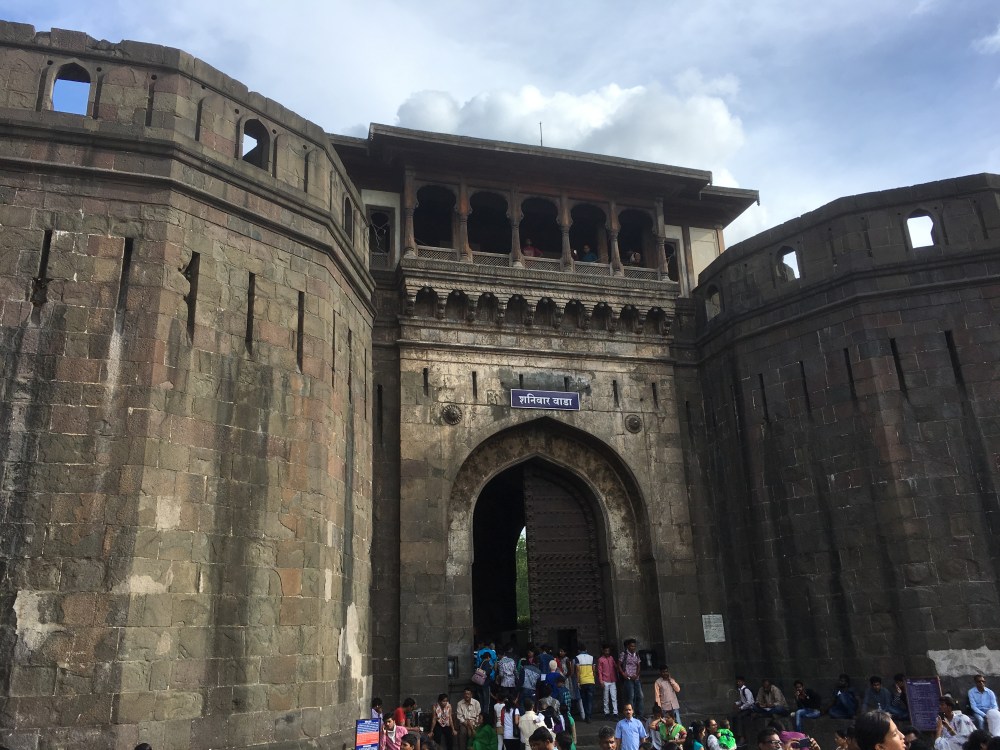
Built in 1730 by Peshwa Bajirao I, the Shaniwar Wada was the principal residence of the Peshwas. The Peshwa was officially the Prime Minister of the Maratha Empire, but during Bajirao I’s tenure, the Peshwa was ruler all but in name, with Pune as the capital city and Shaniwar Wada, the seat of power. Bajirao’s military prowess brought most of India under the control of the Marathas. After his untimely death at the age of 39, his son Nanasaheb became Peshwa – he inherited a relatively stable kingdom, and this period of peace and prosperity saw Pune grow from strength to strength, establishing its reputation as the cultural as well as political capital of the Marathas.
Then disaster struck – in 1761, at the zenith of their powers, the Marathas lost the Third Battle of Panipat to Ahmad Shah Abdali – hundreds of thousands of Maratha soldiers perished on the battlefield, amongst them Nanasaheb’s cousin, Sadashivrao and Nanasaheb’s oldest son, Vishwasrao. This catastrophe sent the Maratha Empire reeling, and this burden of defeat was too much to bear for Nanasaheb who never recovered from the shock. His second son, Madhavrao, is credited with the revival of the Maratha Empire, obliterating the ignominy of Panipat – his unfortunate death at the age of 27 marked the beginning of the end of the Peshwas.
After the celebrated triumphs and the devastating losses, the Shaniwar Wada was to bear witness to a shameful chapter in the history of the Peshwas – a chapter marked with deceit, betrayal and treachery, ending with the brutal murder of Peshwa Narayanrao, younger brother of Madhavrao, upon the orders of their uncle, Raghunathrao. It is said that Narayanrao’s anguished cries of “Kaka, mala wachwa..” – Uncle, save me – still haunt the ruins of the Shaniwar Wada. The last Peshwa to live in Shaniwar Wada, Bajirao II, surrendered to the British in 1818 and was banished to Kanpur. And in 1827, a massive fire raged for 7 days, destroying the interiors of the Shaniwar Wada – leaving only the stone battlements and plinths.
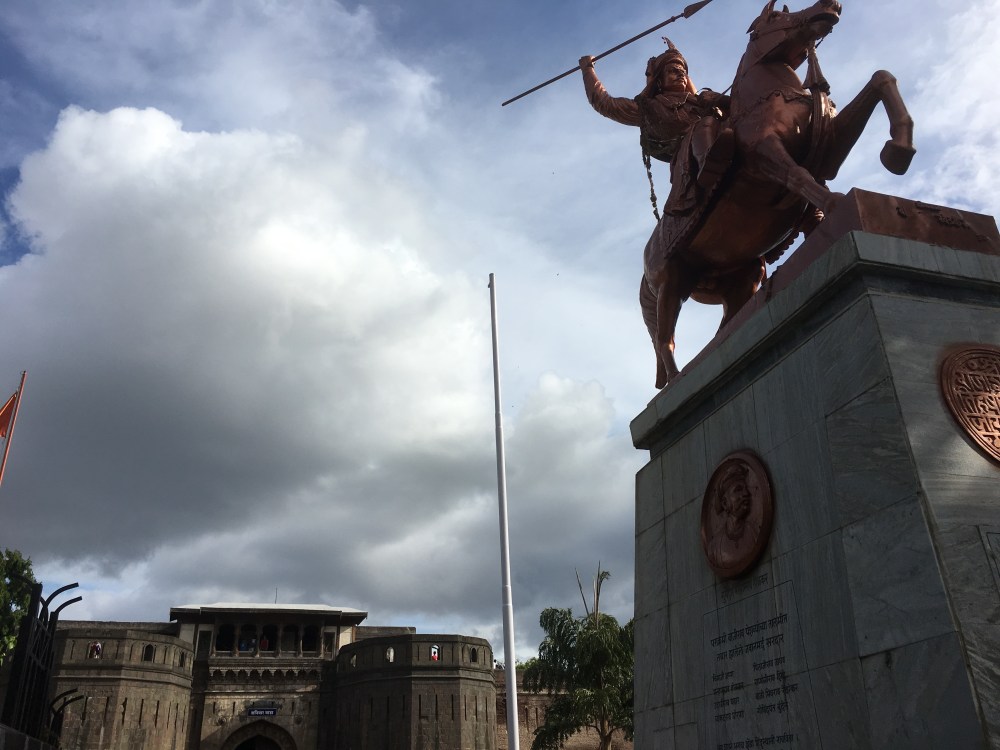
Today, the Shaniwar Wada is a protected monument and open to tourists daily from 9:30am to 5pm. It is located at the heart of the old city of Pune – driving here can be best described as an adventure sport – so the best way to get there is by Uber or auto-rickshaw. A magnificent statue of Peshwa Bajirao is located outside the entrance – and the plinth of the statue describes the history of the Peshwas. The success of the movie ‘Bajirao-Mastani‘ has led to a renewed interest in the Shaniwar Wada, and hundreds throng to spend an evening in the hallowed premises.
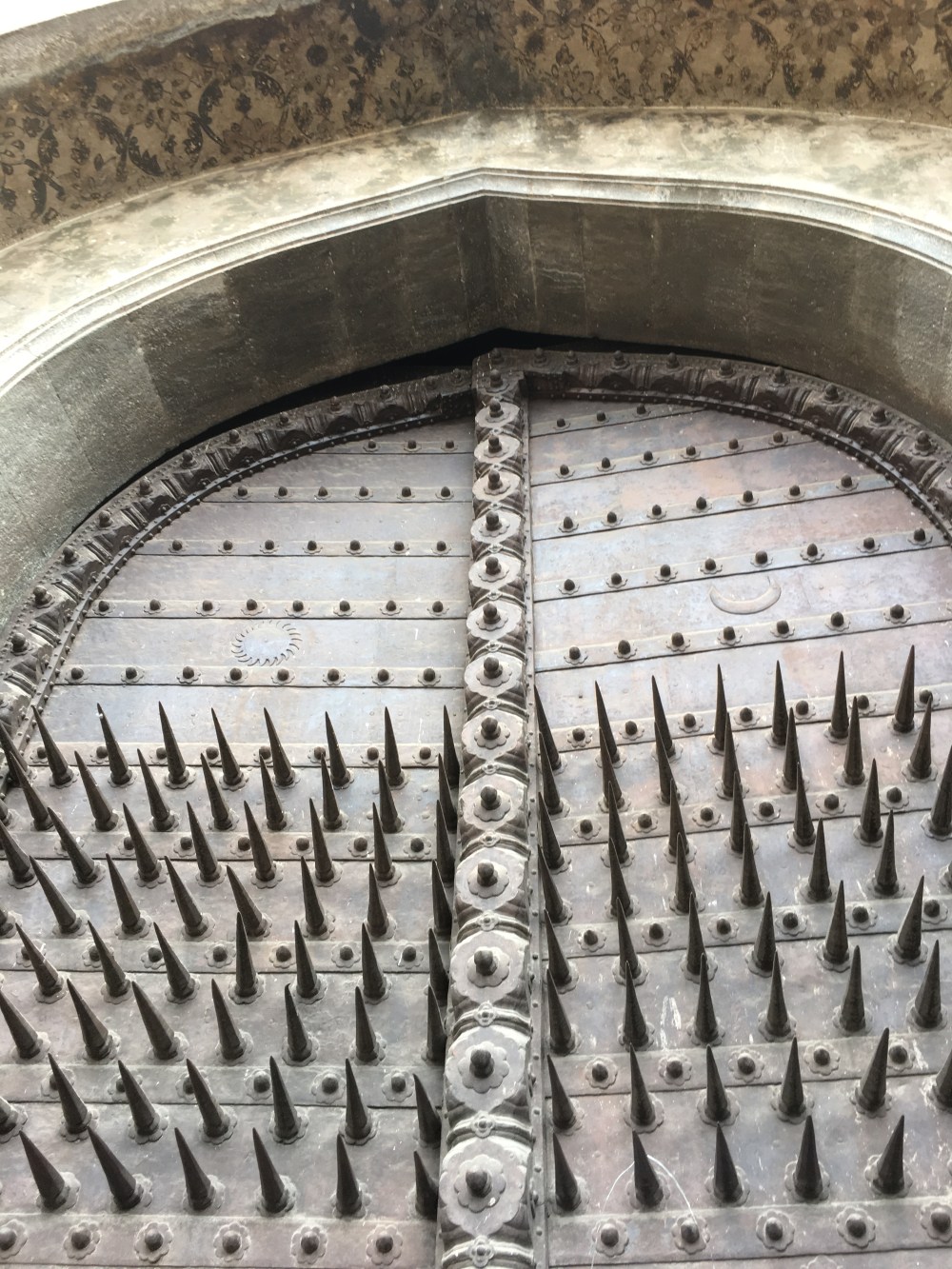
The imposing front entrance, the Dilli Darwaza – Delhi Gate – with its heavy iron gates and formidable spikes fills the heart with pride. The nagarkhana – place for ceremonial drums – is located on top of the Dilli darwaza, and its delicately carved wooden pillars and airy rooms provide a glimpse of what the other buildings must have looked like. Inside the massive battlements, are now gardens – but imagine the grandeur of the seven-storeyed buildings, bustling with people, the walls frescoed with scenes from the Mahabharata and Ramayana, the air perfumed with the scent of flowers, the dancing waters of the Hazari karanja – the Thousand-jet Fountain – imagine the stone plinths telling their colorful tales…


The interiors of the Shaniwar Wada:
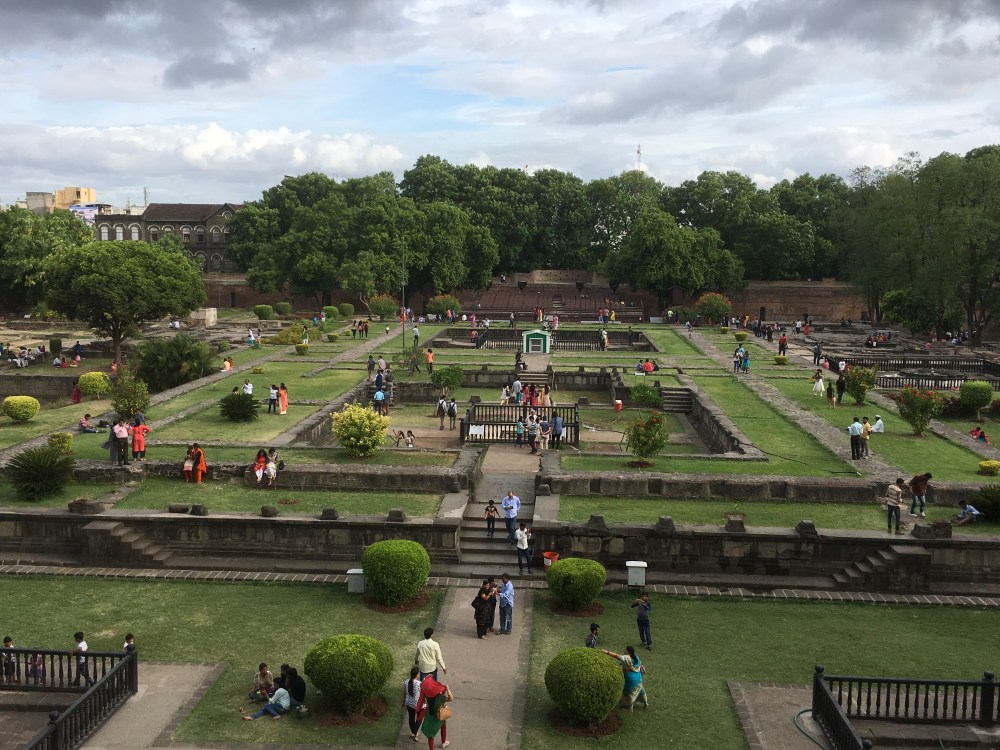
The ruins:


A main attraction of the Shaniwar Wada today is the light-and-sound show. The timings are a bit odd, though. The Shaniwar Wada closes doors at 5:30pm, and tickets for the 7:30pm show are available only at 6:30pm – no, tickets cannot be bought in advance. This poses a bit of a logistical problem – how to kill the couple of hours before the show? I thought I found an ideal solution – the Lal Mahal, Shivaji Maharaj’s childhood home, is a short walk away – unfortunately, the Lal Mahal is currently closed for renovation – so much for my ideal solution!! To make best use of the time, we headed to an iconic Pune ice-cream place – Sujata Mastani – a ‘mastani’ is a fruit milkshake topped with a scoop of icecream – and the mango mastanis here are absolutely divine!!


The light-and-sound show has 2 shows every evening except Tuesdays – the first show is in Marathi, the second in Hindi. I was expecting more information about the Shaniwar Wada, but the presentation is merely a brief history of the Maratha Empire. The narration by Sachin Khedekar is superb – honestly, that’s about the only positive thing about the show. The light effects are nothing to write home about, and I was a bit disappointed that Bajirao’s infamous romance with Mastani featured more prominently than the numerous tales of valor of the Peshwas. I would have liked to hear more about the visionary Bajirao I and his stalwart brother Chimaji Appa – between them, they converted Shivaji’s dream of Swaraj – Independence – to Samrajya – Empire, and the Shaniwar Wada was their crowning glory!! Still, it’s a start – an introduction to the history of the Peshwas – and for that reason alone, the Shaniwar Wada should be on the top of the must-see list for all visitors to Pune!!


Information:
Shaniwar Wada Timings: 9:30am to 5:30pm, tickets Rs. 15 per person
Light-and-sound show: Marathi at 7:30pm, Hindi at 8:15pm, tickets Rs. 50 per person
 A place called home...