Another must-see place on Pune’s cultural trail is Raja Dinkar Kelkar museum. Currently administered by the Department of Archaeology of the Maharashtra government, this museum was established by Baba Dinkar Kelkar in the memory of his son, Raja, who passed away at a young age. This large private collection, with artifacts from all over the world, some dating back to the 13th century, has been on display since 1960.
The first chamber is a collection of household items from Maharashtra and Gujarat. The huge copper vessels for storing water, the intricate polpat-latnas (rolling-pin and platforms), buttermilk churns all evoke an era of tradition – in comparison to these, our modern kitchen implements seem so utilitarian – never has practical been so boring!!


A surprise display in this section was a selection of delicate Chinese porcelain vases – beautiful specimens!! I wish the information tabs had described the century of origin and the dynasty to which these vases belonged!


The next section was Lamps – a mind-boggling variety of lanterns, standing oil-lamps, hanging lamps, chandeliers – every possible variety of lamp is displayed here. Some of these are still in use – it is fascinating to see how long some of these designs have existed!


This section also included a display of writing instruments – rococo inkwells, flamboyant quills – a writer’s dream! Here, too, is displayed what must be the world’s largest collection of nut-crackers – so intricately designed, it’s hard to imagine that these were once actually used daily!!


Hands-down my favorite was the Musical Instruments section!! String instruments – sitars – in the shape of swans, peacocks, serpents, alligators – have to be seen to be believed!! And drums – I had no idea that so many type of drums actually existed – I mean, a five headed drum, seriously!!


The ancient chess-sets, a dice game of the Mahabharata fame – saripat, and playing cards were delightful. The chess-men in particular, extraordinary detailing!!


The piece de resistance of the museum is the Mastani Mahal display. Built in 1730s, the original Mastani Mahal was located in Kothrud, and was the residence of Mastanibai. Her living quarters were dismantled and reassembled here in the museum. Although heavily cordoned off, the opulent luxury of the room is obvious – how I would love to have that huge silver-framed mirror in my house!!


We didn’t really linger – so we managed to walk through in a couple of hours – but the Kelkar museum would be a great way to spend a rainy afternoon! It is open everyday from 10am to 5:30pm, and the admission fee is Rs. 50 per person. Planning to take photos ? – that will be an additional Rs. 100!! Still pretty reasonable, though!!
A hop, skip and jump away – well, a 5 minute rickshaw ride away – is the Vishrambaug Wada. Built as the residence of Peshwa Bajirao II, the last of the Peshwas, Vishrambaug Wada is one of the better preserved palaces of the Peshwai era. The front facade retains its imperial look, but the Pune Municipal Corporation has taken over the rest of the building – a post-office and the birth-date registry both have offices here. Although there is a sign for a museum, the litter-strewn entrance and the rickety stairs inside almost had me turning back.
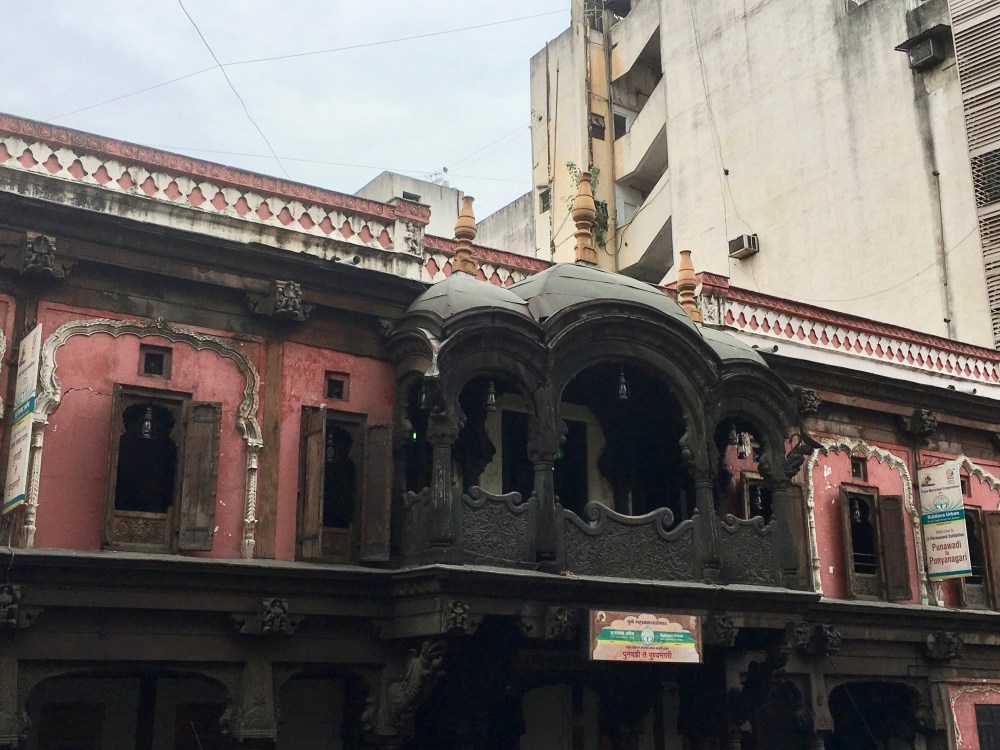
The museum is almost deserted – it is not very well advertised, and although smack-dab in the middle of Pune’s busiest intersection – not many people are aware of the treasure trove here!! The only portion of the original palace left is Bajirao II’s audience hall – the intricately carved teak pillars and ceilings bear testimony to the magnificence of this palace. The real treasure, though, is a detailed history of the development of Pune during the reign of the Peshwas. From the layout of the Shaniwar Wada complex, to the construction of the aqueduct from the Katraj lake, histories of establishing the different peths or boroughs of the city, development of famous Pune temples like the Parvati, Khunya-Murlidhar and Omkareshwar temples, as well as the history of the Peshwa dynasty – it is all chronicled here in easy-to-read form. An absolute must for any Pune-phile!!


Information:
Raja Kelkar Museum – Open everyday from 10am to 5:30pm. Entrance Rs. 50 per person, plus Rs. 100 for cameras
Vishrambaug Wada – Open everyday from 10am to 5pm. Entrance Rs. 10 per person.
 A place called home...